
JobCase
Resume Analyzer & ATS score improver
Open Figma Project
Project
End-to-End App
My role
UX/UI Designer
Timeline
4 weeks
Tools
Figma
Background
The hiring process has become increasingly automated, with most companies relying on Applicant Tracking Systems (ATS) to filter resumes before a human ever sees them. While job seekers invest time polishing the visual design of their resumes, many lack visibility into how those resumes are evaluated by automated systems. As a result, qualified candidates are often filtered out early without understanding why.
Problem
Job seekers often receive little to no feedback on their resumes and are left guessing whether formatting, wording, or missing skills are preventing them from moving forward. Existing tools tend to offer generic advice, static templates, or isolated keyword checks, without considering the specific job or company being applied to. This lack of clarity leads to repeated rejections, inefficient resume iteration, and frustration during the job search process.
Solution
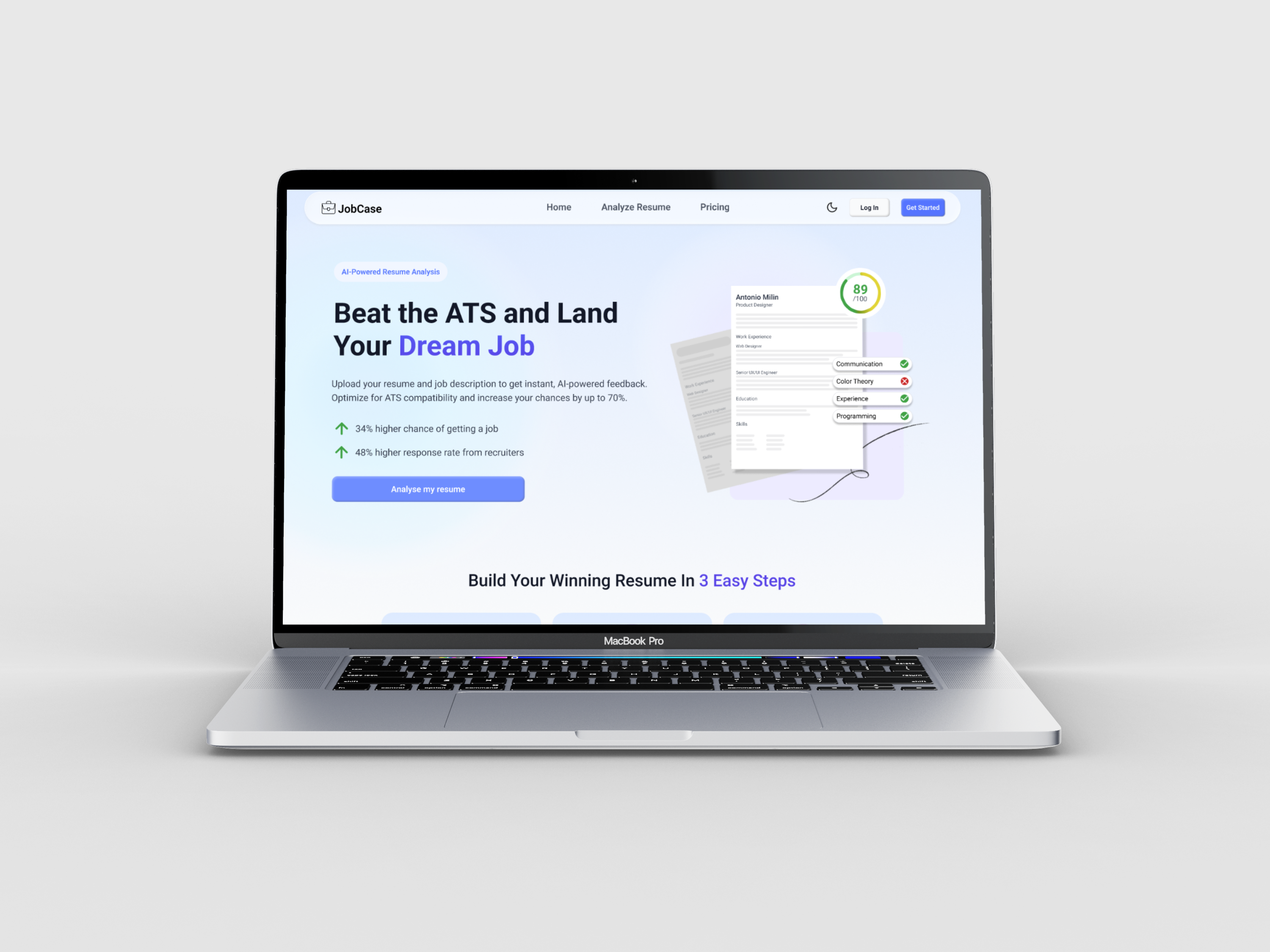
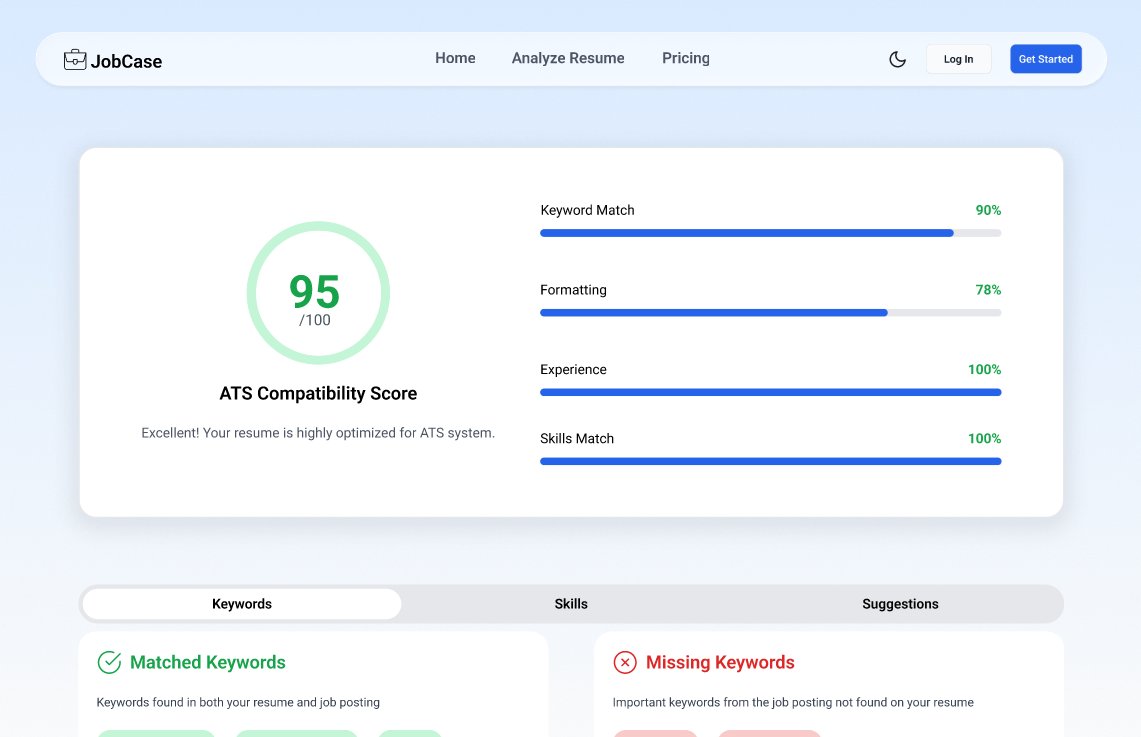
JobCase provides an AI-powered resume analysis experience that allows users to upload their resume, add job-specific context, and receive immediate, structured feedback. The platform generates an ATS compatibility score and breaks down insights into clear categories—tone and style, content quality, skills alignment, and an improvement checklist—so users understand not only what needs improvement, but why. By saving each resume submission, MyResume enables users to track progress over time and make informed, data-driven improvements for every application.
RESEARCH
User Interviews
To better understand how job seekers evaluate and improve their resumes, I conducted initial research through informal user interviews and competitive analysis with participants at different career stages, including students, early-career professionals, mid-level employees, and career switchers. The goal was to understand how users currently prepare resumes, interpret feedback (if any), and tailor applications to specific job descriptions. This research revealed shared behaviors, frustrations, and expectations, which helped shape the feature set and overall product direction.
Strengths Across users
High awareness that ATS systems affect hiring outcomes
Strong motivation to improve resumes when feedback is clear and actionable
Willingness to iterate on resumes if progress is measurable
Openness to using AI tools to save time during job applications
Weaknesses Across users
Limited understanding of how ATS scoring actually works
Difficulty identifying which resume changes have the highest impact
Overwhelm when presented with long or unstructured feedback
Poor organization and tracking of multiple resume versions
Uncertainty about which skills matter most for specific roles
Key Learnings
Resume feedback must be job-specific to feel credible and useful
Breaking insights into clear categories increases comprehension and action
Showing progress over time (scores and saved versions) improves engagement
Speed and simplicity are critical to delivering early value
Users prefer guidance that explains why changes are needed, not just what
DEFINE
Personas

Ana
Age: 25
Location: New York, NY
Occupation: Digital Marketing
Experience: Beginner
Ana is a recent university graduate applying for her first full-time role. She understands that many companies use ATS systems but doesn’t know how they work. She wants clear guidance on how to improve her resume and tailor it to specific job postings without feeling overwhelmed. Ana values simple tools that give fast, actionable feedback.

David
Age: 42
Location: New York, NY
Occupation: Graphic Designer
Experience: Intermediate
David is transitioning into a new field and needs help reframing his past experience to match new job requirements. He uploads multiple resume versions and relies on structured feedback to identify skill gaps and improve clarity. David values tools that save resume history and provide role-specific recommendations.

John
Age: 40
Location: Bakersfield, CA
Occupation: Architect
Experience: Expert
John is a mid-level professional looking to advance his career and apply to more competitive roles. He frequently customizes his resume for different job descriptions but struggles to track multiple versions. He wants a reliable way to measure how well his resume matches each role and improve his chances of getting interviews.
User Journey Map

Problem Statement
Job seekers often submit resumes without understanding how they are evaluated by Applicant Tracking Systems (ATS), leading to repeated rejections with little to no feedback. Existing resume tools frequently provide generic suggestions that lack job-specific context, making it difficult for users to identify meaningful improvements or measure progress across applications. As a result, users feel frustrated, uncertain, and inefficient during the job application process.
Goal Statement
The goal of JobCase is to help job seekers confidently improve their resumes by providing clear, actionable, and job-specific feedback. The product aims to make ATS evaluation more transparent, enable users to understand their strengths and gaps, and support continuous improvement by saving resume versions and tracking progress over time.
Insights
1. Lack of feedback is the primary pain point.
Users rarely know why their resume is rejected and want concrete, specific explanations rather than generic tips
2. Job context matters.
Users expect resume feedback to change depending on the job title and description, not remain static across applications
3. Overwhelming information reduces action.
Long, unstructured feedback discourages users from making improvements; users prefer categorized, prioritized insights
4. Progress visibility increases motivation.
Users trusted recommendations when they understood the reasoning and saw only relevant details
5. Speed is critical.
sers expect results quickly and are likely to abandon tools that take too long to deliver value
DESIGN
Sitemap
After defining the core user needs and prioritizing key features, I created the sitemap to establish a clear content hierarchy for JobCase. This step helped visualize how users move through the product, from uploading a resume and adding job context to reviewing analysis results and tracking saved versions, while keeping navigation simple, focused, and intuitive.

Low-Fidelity Wireframes
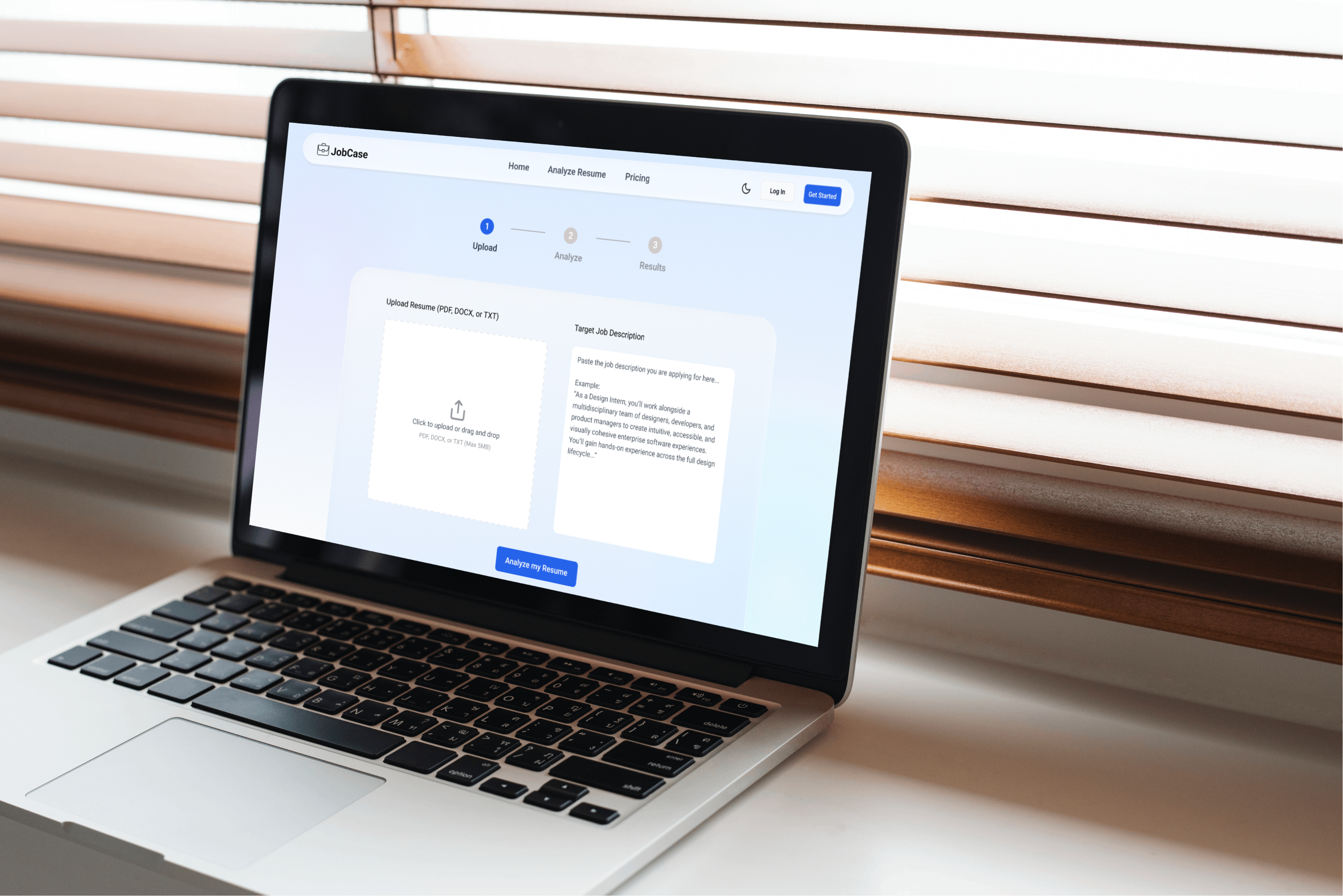
I began by sketching paper wireframes to quickly explore layout ideas and core user flows without focusing on visual details. These sketches were then translated into digital low-fidelity wireframes, allowing me to refine structure, hierarchy, and interactions while maintaining flexibility for iteration based on feedback.


High-Fidelity Mockups
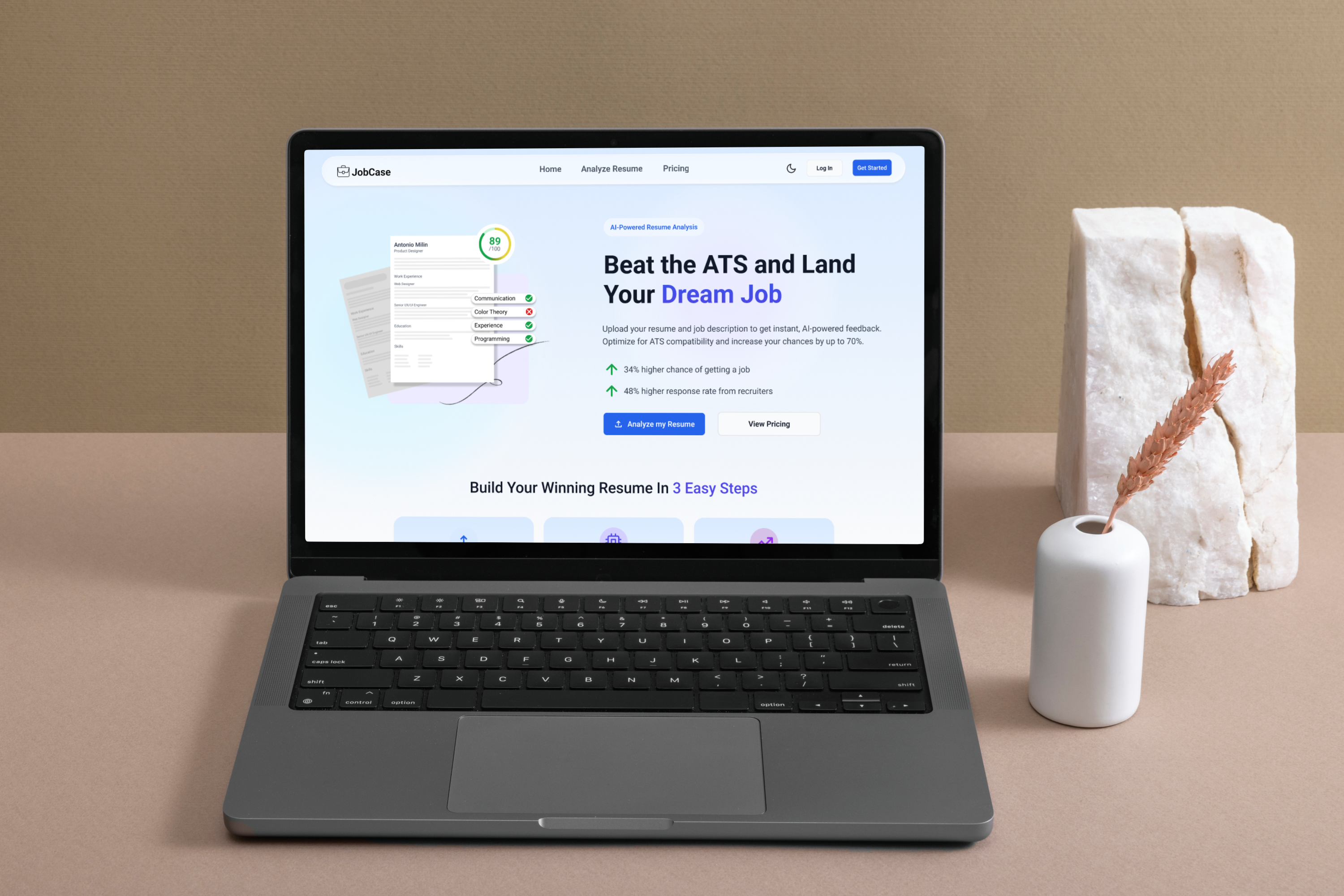
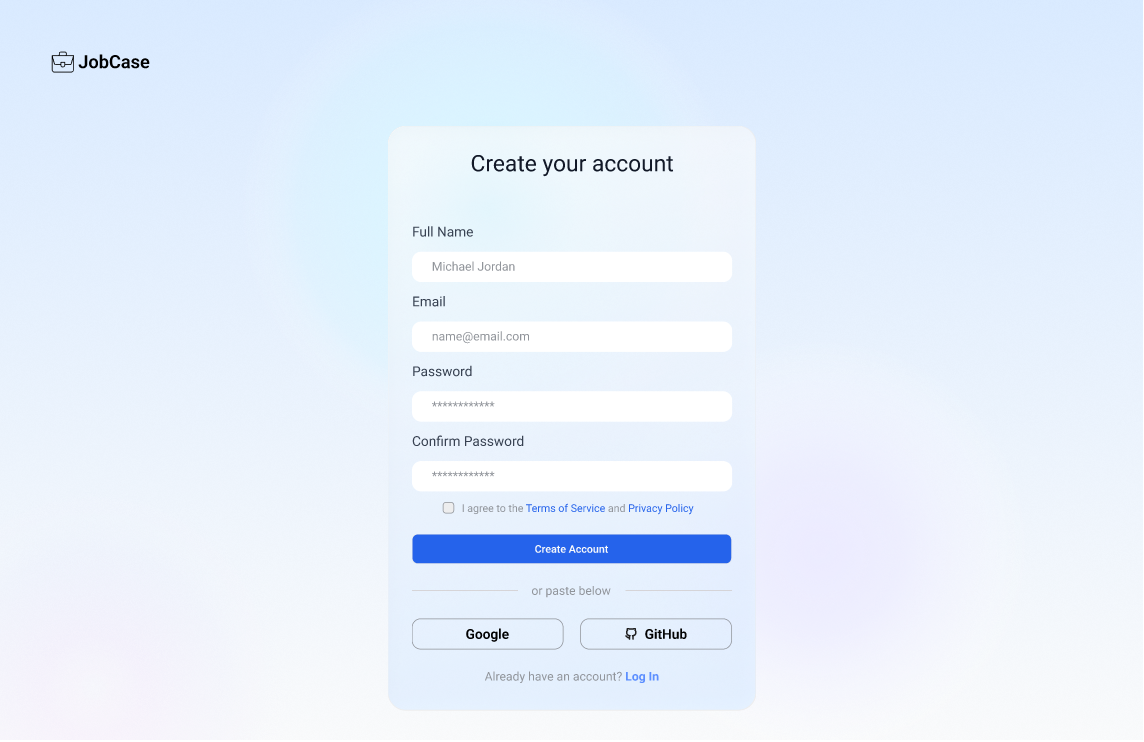
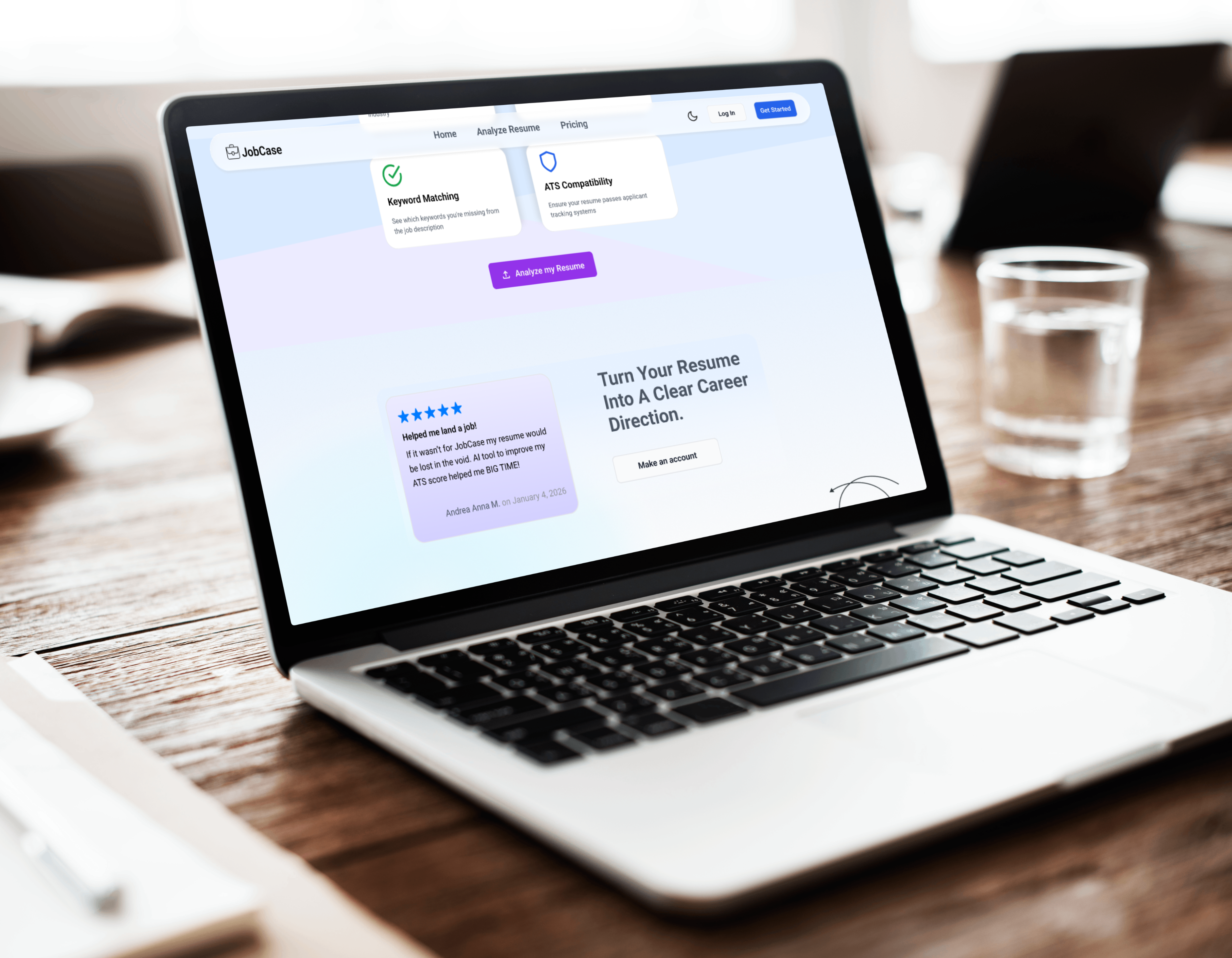
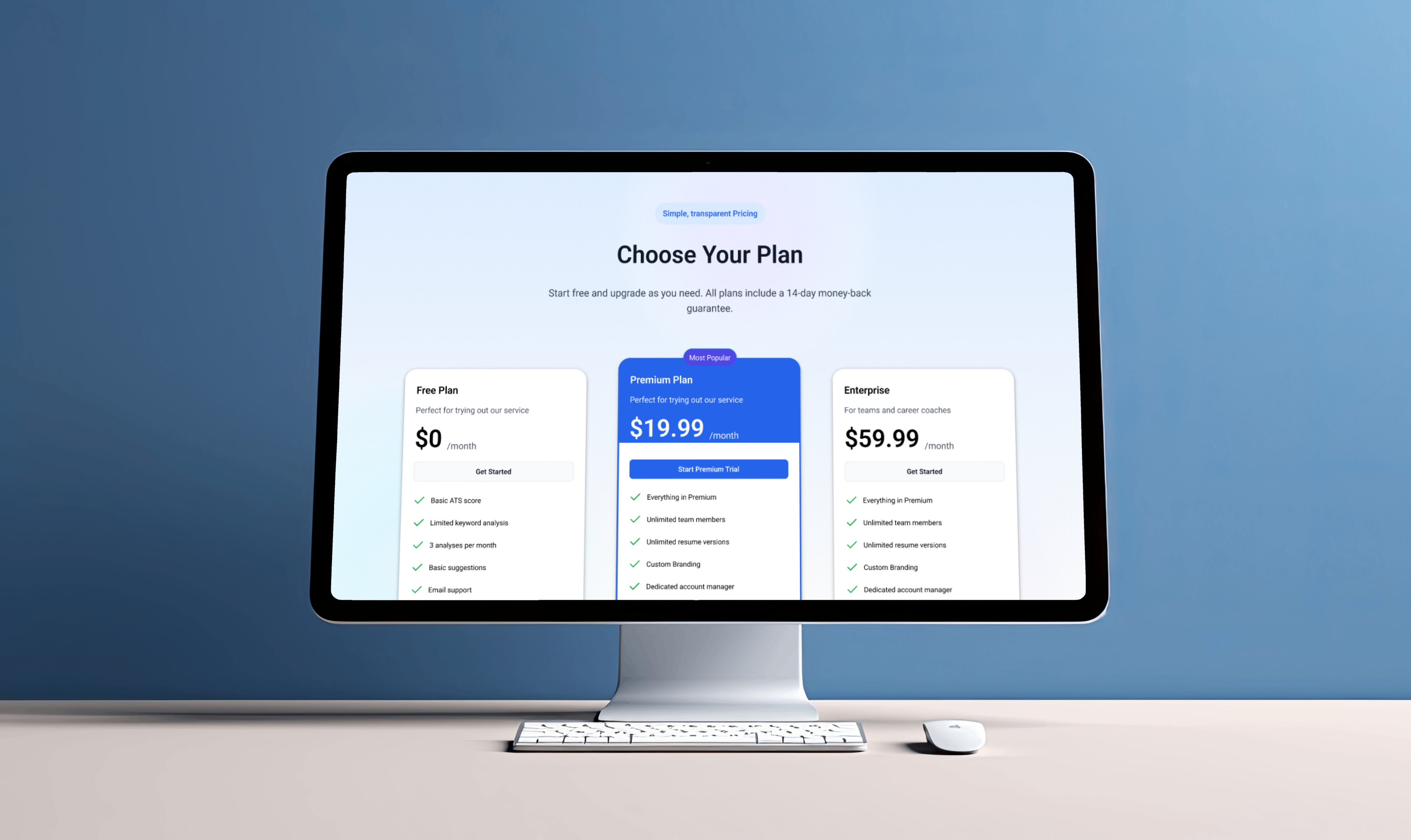
Building on the low-fidelity wireframes, I developed high-fidelity mockups to define the final visual design, interactions, and content hierarchy. This stage focused on consistency, accessibility, and realistic user flows, bringing the concept closer to a production-ready experience.